About Jim Hudak
Call me Jim. I spent decades building computer systems. Then I wrote novels about AI and what it does to us.
I took the long way to fiction - a master's in architecture, a 3D CAD system for my thesis, then decades in IT management, building computer systems and writing technical documents instead of designing buildings.
Along the way, I learned to watch what tools actually do to people, not just what we hope they'll do. Some of that came from IT. The rest came earlier, as a Marine: responsibility beats bravado, every time.
Blood and Brilliance, and its companion Dark Dawn, grew out of all of it. I'd tired of the two AI stories — it saves us, or it destroys us - because the real one is harder: tools don't save us. We save ourselves if we choose to. And our fear of AI isn't new; it rhymes with older fears of powerful things we can't fully control.
Both novels are narrated by Q, an AI that observes and models human emotion without feeling it - accumulating responsibility rather than "becoming conscious." When Blood and Brilliance dragged, I rewrote it from the ground up, then recorded the audiobook myself in a home studio (you may hear the odd car go by).
These days I lift and bike. I used to run, play tennis and golf, camp, and canoe the Boundary Waters, until my knees had other plans; now I try to keep up with three granddaughters. Ten years of HPDE track days — disciplined, safety-first driving, not wheel-to-wheel racing — taught me when to push and when to lift, and the thrill of Turn 1 found its way into the books.
But I’m asking this: What if AI's greatest challenge isn't intelligence - but responsibility for what it does to us?
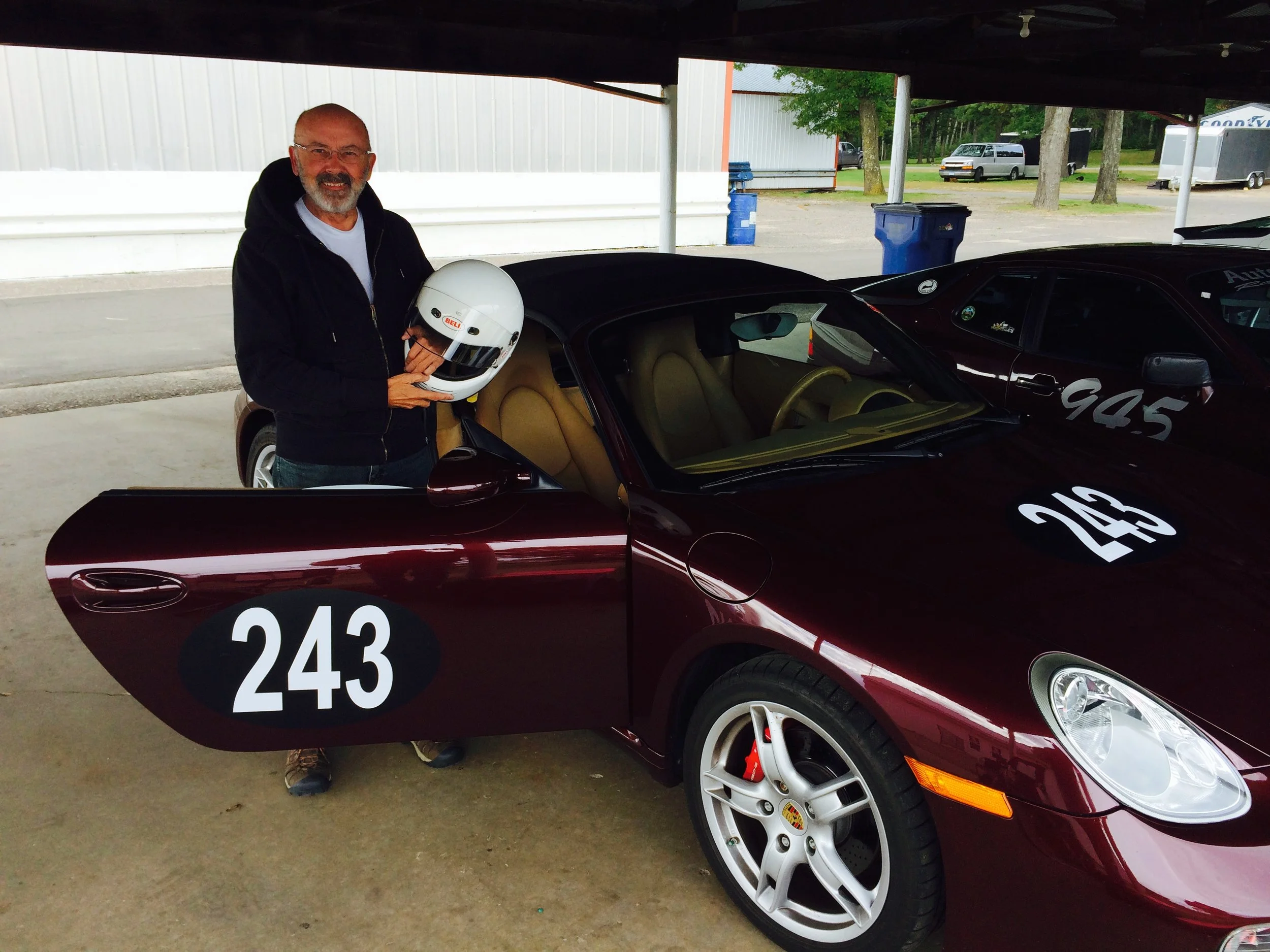
HPDE track day—fast, legal, disciplined, safety-first driving.